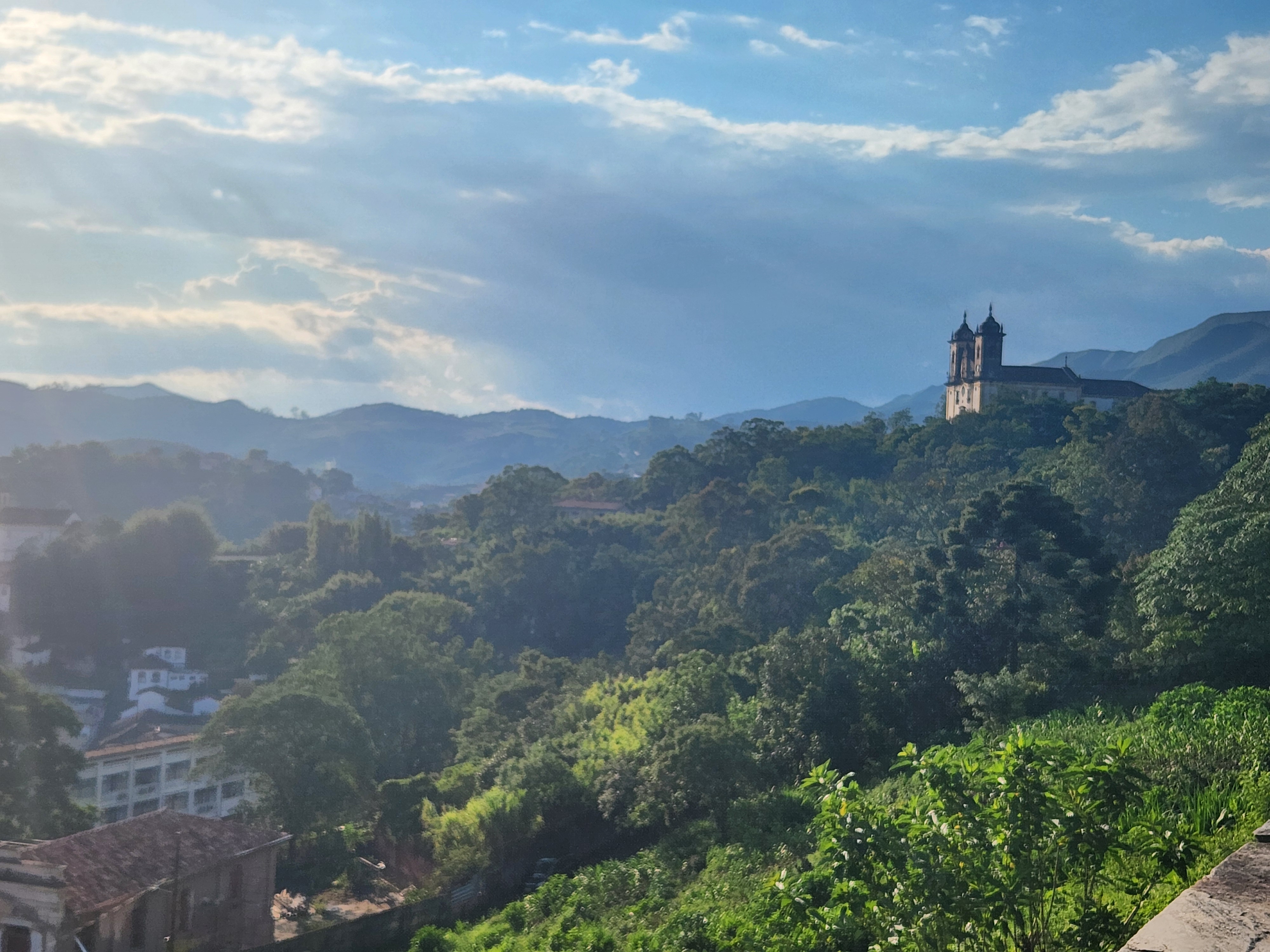
>95% of all tourism spend in Brazil comes from Brazilians (source). With Brazil mostly being known for Rio’s beaches, sensationalized poverty (favelas), raunchy Carneval parties, and high levels of crime, it’s easy to see why Brazil is very under frequented as an international destination. That’s not even considering it being extremely remote and having poor tourist infrastructure.
Having spent a total of 20 months in Brazil over the course of my life and explored cities even the natives are unfamiliar with, I feel somewhat qualified to write on what it is like to live and travel here. Brazil is in my opinion, one of the interesting countries on the planet, but a bit inaccessible. This article is meant to give you tools and motivation to visit.
The Good:
The culture is incredibly extroverted and dynamic. Brazilians are wild, fun, and easy to make friends with, especially if you speak Portuguese. I am an extreme introvert, but Brazil seems to be the exception. Just a couple days under the sun here leaves me feeling invigorated and outgoing. Brazilians embody a passion for life that I can’t find anywhere else very easily. Romance is dramatic and fast-paced. It’s a stereotype, but it’s true.
If you are a party person, no other country compares.
Some of the best beaches in the world, like Rio, Recife, Fortaleza, and Florianópolis. Even outside of the cities you’ll find many underrated beaches. Some of the best nature in the world, from Iguazu to Lençóis Maranhenses to the Amazons. Brazil is a vast country covering several biomes, the largest rainforest in the world, big northeast deserts, highlands in the southeast, central plains, and hilly Santa Catarina and Minas Gerais.
You can’t pin down “One Brazil”. Every area, even every city, has a much different feel to it. You never know what the next place is going to be like until you put some boots on the ground. Brazil is sort of the US in that many Brazilians will only travel here their whole lives, and that’s easy to do with so much diversity.
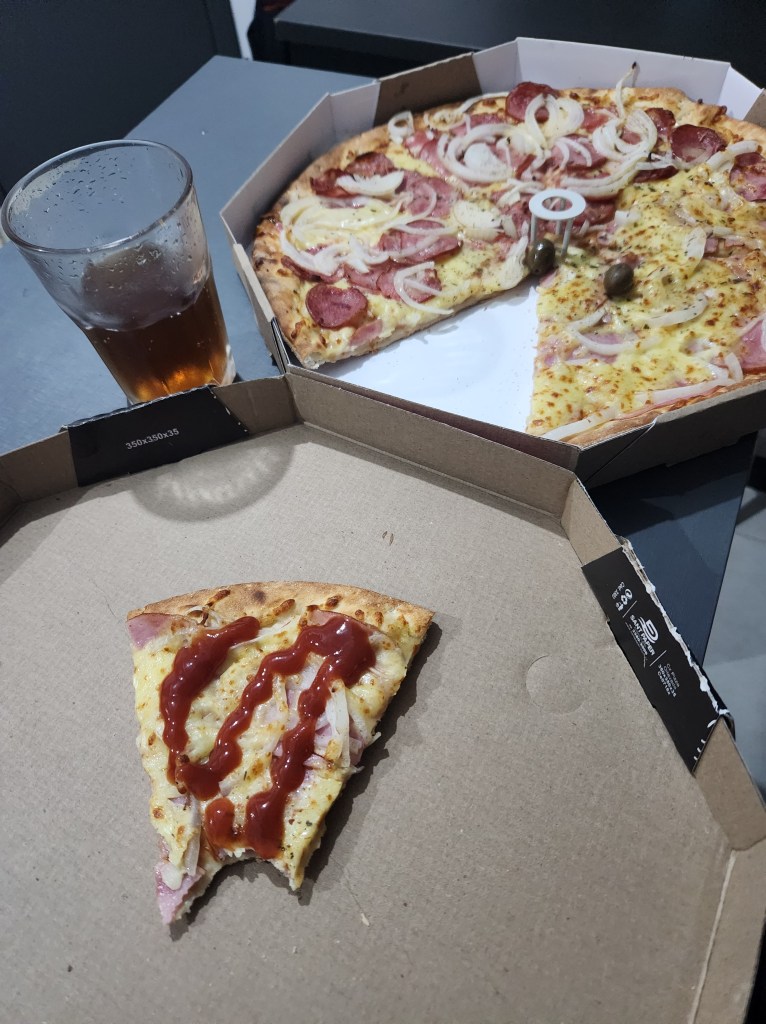
The food is great. Some of the best steak in the world for a fraction of the cost, since south Brazil is “Gaucho” land. Churrasco, Feijoada, cheese bread, and of course, Açaí (It’s the real deal in Brazil, not these fake valley girl smoothies). It has a super unique cuisine compared to many other LATAM countries.
As the largest receiver of the Atlantic Slave Trade, you have impressive ethnic and cultural diversity, and lots of relics from the colonial age. Amazonas has some of the least contacted tribes in the world, and the south has high European ancestry.
The Bad:
The 2024 Travel and Tourism Competitiveness Index ranks Brazil low in several areas: its ground transport infrastructure (ranked 129th), quality of roads (121st), and quality of air transport (131st), price competitiveness (126th), safety and security (106th). I can vouch for those numbers. The infrastructure lags behind Argentina and Uruguay, especially in the north. On price competitiveness, it’s cheaper than US/EUR, but more expensive than SEA. You can find cheap stuff, but it’s not going to be quality.
Let’s discuss safety next. Many Brazilian cities rank in the top 100 most dangerous cities in the world, and that’s not just for pickpocketing. I lived in Recife (No. 1 murder capitol of the world in 2015) and was assaulted twice. How I survived the favelas that long is beyond me. You will have to actively avoid certain places in Brazil if you value your safety, sorry. Don’t trust anyone you’ve just met, and sometimes you can’t trust people you’ve known for longer. Keep Brazilians (as friendly as they are) at arms length until you know you can trust them. You are especially at risk as a foreigner, since Brazil is under travelled.
Also, don’t listen to these dumbass travel vloggers that try to tell you, “I went to favela and I was perfectly safe! They’re so friendly to foreigners”. The dangers are real and they will catch up to you. You may be able to walk through a real favela (not just the tourist ones) a couple times and get away with it, but poverty life is not so glam glam; it will catch up with you.
The flights are a BIG bummer. The quality of Brazilian airlines is atrocious. Some of them have barely functional websites. Despite being such a massive country, the only real international portal is GRU (São Paulo), and possibly GIG (Rio). Flights in/out of Brazil are some of the most expensive I’ve seen, even surpassing prices from North America to Asia, and domestic flights are double what they should be. Airports themselves can be poorly organized.
Then, there’s the issue of accessibility. If you don’t speak Portuguese, you’re going to have a rough time getting around. There is very little English support and little tourist infrastructure. Many sites require you to have a CPF (Brazilian ID), or you can’t complete the sale or access wifi. There’s a lot of developers and companies that have failed to take foreigners into account.

Getting Around
Between states, your best options are going to be plane or bus. Long-distance buses are typically the cheapest options and fairly reliable and comfortable (make sure you vet the operator). For longer than 12 hours, I would just fly. Check out my other article if you’re interested in flights: the-ultimate-guide-to-cheap-flying.
It is absolutely possible to do a long road-trip in Brazil, and rental cars are not very pricey. I did one across Santa Catarina and Paraná with no training or international license. If you are used to driving in the US, it will be a bit jarring. If you’ve driven in SEA before, you’ll be fine. Just be aware that safety standards are lower, drivers are aggressive, speed traps are ever present, and you can expect some slowdowns. I found the interstate system in the south to be better maintained than the north, just lacking consistent signage and rest stops. Phone coverage also left much to be desired.
For city travel, it really depends on the city. Smaller cities are mostly car dependent. Major cities have a transit system of light rail (called metrô) and bus (ônibus), but they can be difficult to use and crowded. I would advise familiarizing yourself with the municipal routes before you go, as the internet is going to be somewhat unreliable. This is where knowing how to ask for directions in Portuguese will come in handy. Google Maps and Waze are preferred for navigation (lean Waze – Maps often messed up on the route). Either way you just have to stay aware and be prepared to adjust your route.
Uber remains the best way to get around in car-dependent cities or if you’re not looking to waste 2 hours trying to figure out how the transit system works (looking at you, Floripa). It’s also just safer – hate to say it but normally the metro stations are where the sketchiest people hang out. One guy got smashed between the platform and the train because he was drunk on the tracks… they had to use jaws of life to pry half of him out… this happened 100 meters away from where I was living.
Taxi drivers will nickel and dime you. Just like anything in a low-trust society, know the price well before you agree to it.
Walkability: It depends on the neighborhood. Brazilian cities are much more walkable than North America, but tend to be less walkable than EUR. Normally, I can find a shop, barber, bakery, park, and bus route within a 5 minute walk, and that’s all I need. You shouldn’t need a car when staying in the city unless you drive a lot or picked a boondocks location.
Staying Safe
You need to develop what I call “Senso Brasileiro.” Entering an empty alleyway and your “Senso” is tingling? Pick a different street. Public park getting dark and no women/children out? Time to go. Crazy/high/drunk/maloqueiro looking dudes? Time to go home.
This isn’t something I had developed before coming to Brazil. You need to become very aware of your surroundings and understand when the street is not safe. You need to know the areas you are going to. If you do, you will most likely have a very safe trip, since the violence is very concentrated. Avoidance is by far the best strategy for safety, and I say that as a martial arts practitioner that has knocked out a maloqueiro before.
DON’T GO INTO FAVELAS. If I’m walking somewhere I pull up a satellite view of the area. Favelas look like urban “soup” with no organization, cheap roofing, and unnamed streets. They are very easy to notice from space but sometimes hard to spot if you are passing by, as they may be hidden from the main road by other buildings. You will wander through and BAM! All of a sudden you’re in a favela and don’t know how to get out.
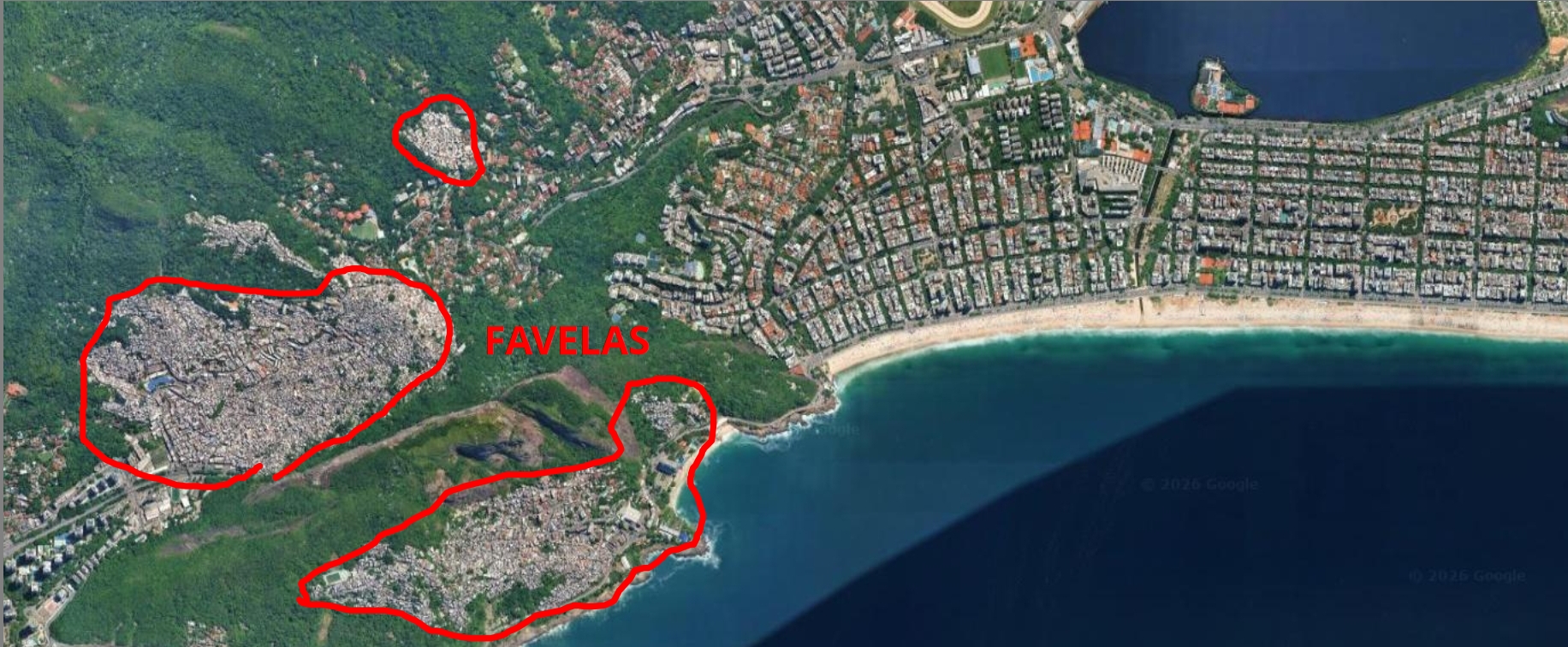
If you find yourself in one, don’t panic and make yourself an easy target. Confidently find your way back to an arterial road and take a bus. Most favelas aren’t larger than half a mile anyway and are easy to avoid by relocating.
SCAMS: Card is becoming the new meta for payment in Brazil. Use Revolut/Wise so any theft doesn’t compromise your entire bank account. Never give out personal info. The only way for a sammer to win is for you to volunteer defeat. Never let your passport or bag containing passport out of your site. I brought a backup phone and two backup cards. Better to be overparanoid, even when people are nice (Thank you lady that found my card and reported it to me on Facebook).
Oh yes, and try not use your phone on the street. Especially in major cities.
Never allow someone else (with the exception of tour guides) to relocate you from wherever you met, especially if you’ve been drinking. This is extremely dangerous because if they get you into their territory, they have all the advantages. This is how the recent flight attendant guy in Colombia got killed (source: he left with an unknown group).
Your default answer to anyone initiating an interaction with you on the street should be “no.” If people are persistent, ignoring them will typically do the trick. This is just generic safety advice at this point, but I feel like it needs to be restated for Brazil.
If you’re a party person (I’m not) and willing to cut back on these guidelines, I won’t spoil your fun. Just be aware that you are increasing the risk by disregarding them. Ideally, pick buddies that you know before your night out, and have vetted for red flags.
Language Barriers
I highly recommend learning at least some basic Portuguese. Even if you’re not conversant, Brazilians love it. It’s not like Europe where you spend 4 years learning a language to semi-fluency and no one gives a flip and switches to English instead (I’m still mad). I much prefer this because I can work on Portuguese in every conversation I have. Portuguese is a very fun and melodic language.
If you prefer not to learn, touristy areas like Rio or international business centers like São Paulo are going to be where you want to spend most of your time. Hospitality workers in these areas are more likely to speak English. If you are feeling more adventurous you may be able to get by on Google Translate for other areas; just don’t expect any accommodation.
Planning Your Trip
This is another problem you may run into while planning a trip: The online information isn’t so good, or there’s nothing geared towards tourists. For example, you can find hundreds of tours on GetYourGuide at different prices in a city like Budapest, but Belo Horizonte (3rd largest city in Brazil) at time of writing this has only 3 tours despite being 5x the size!
Personally, I preferred it that way. Exploring Brazil felt like the new frontier. I was the first American to stay at most of the places I stayed. I didn’t see a single white person (well, North American white person that is) for weeks. If you’re the kind of person looking for more of an uncharted adventure, Brazil can be a good place for that.
That said, there are resources, they’re just harder to find. That 95% spending is coming from Brazilians that can get around easier and deal with brick and mortar establishments. You have to be more independently minded as a traveller here; it’s a good place to get those skills. Google maps research, AirBNB hosts, word of mouth, restaurant hosts, and independent blogs are all resources I have used.
That said, If you’re going for a two-week “samba in rio” experience, that shouldn’t be too hard to plan.
Misc. Advice
- You won’t need cash in most places. You can probably get by on card alone if you’re in Rio, SP, Floripa, etc. I normally carried cash anyways, and I did need to use it away from major cities. Keep in mind you can’t withdraw from most ATMs, only the red ones (Bradesco I believe) in transit stations, malls, pharmacies, or in the bank itself.
- You should be able to get by without a CPF, but it can be annoying for online forms and you may have to speak with someone and explain your situation. If you need it though: Fake CPF Generator.
- I used OsmAnd to download offline maps while I was on a road trip.
- Get vaccinated for yellow fever and a few others I may be missing.
Saving Money
- Local SIMs > eSIM.
- Groceries are very affordable here, especially outside major cities. If you’re willing to eat Brazilian food (why would you come if not) the buffet model is very common. Lunch is the biggest meal of the day, and you can typically pay by the kilo. This tends to be highest value food. Contrary to popular belief, Rodizio (Tucanos or Fogo de Chao) is not super common. You can also eat meat fairly cheap compared to most the world. I found good ground beef for just $1.50/lb!
- Don’t buy imported food, you will pay out the nose. Electronics are way overpriced.
- Cities can be HUGE and hard to navigate, with very different conditions between neighborhoods, so I recommend prioritizing location in your bookings. This will save you much more in terms of transport and headaches.
- Services are some of the best value in the world. Get your clothes tailored, hair cut, etc.
- Hostels are rarer here, but they tend to be good value. I’ve had good experiences with them so far.
- Brazilian bread! Just get some bread and butter for breakfast and it’s $0.25 for 3 Pão francês.
 Tightwad Travelling
Leave a comment